
The Gativus project

From abstract theory to network protocol and physical hardware

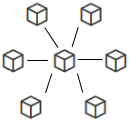
Instead of centralized databases or monolithic neural networks, Gativus aims to create a distributed network (GNET) composed of unified and addressable digital entities (NDDI) operating on the IPv6 protocol.

Gativus’s mission is to launch digital morphogenesis.

GTOM · GNET · GATE · NDDI

Key directions for the project's development

GTOM

Gativus Theory of Mind

GTOM considers the phenomenon of consciousness not as a monolithic structure, but as a dynamic superposition of three independent levels (components).

Consciousness: (Qualitative, Spatial, Symbolic)
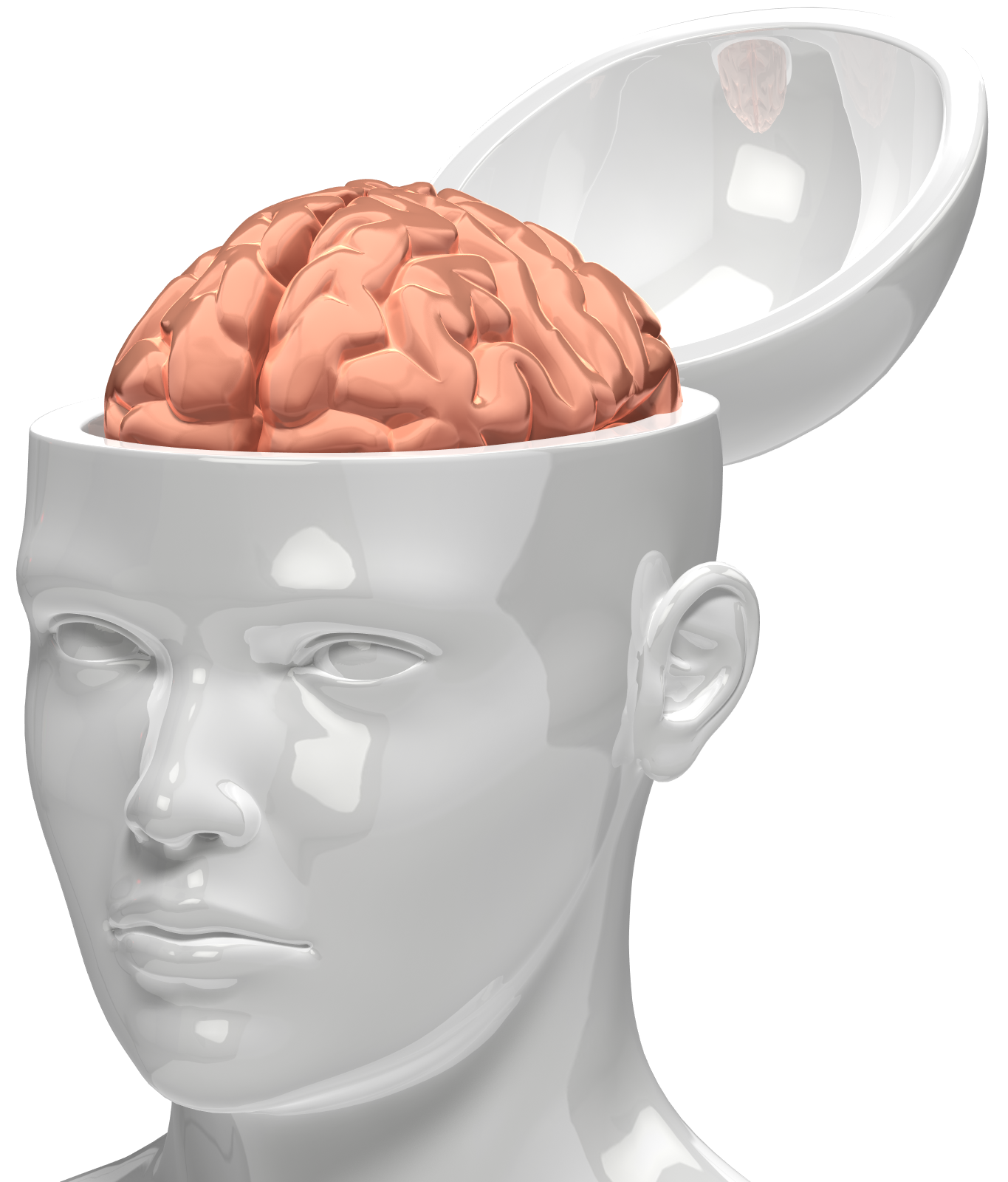
Brain Diagram
Neural network: (Cellular, Spike and Parameter Network)

Spatial Consciousness

Navigation and orientation in 3D space. The system works with genetically predefined goals and builds topological routes to achieve them.

Symbolic Consciousness

Interaction in multidimensional space of concepts. Each concept has its vector and symbol. LLMs/GPTs mimic this layer, but symbol manipulation is insufficient for subjectivity.

Qualitative Consciousness

Formation of complex target concepts — "beauty", "correctness", "honor". The Hegelian Aufheben operator turns the system from a calculator into a Subject with intention for self-improvement.

Consciousness is modeled as a hyper-map of 11 layers of elementary maps — from sensory inputs to quality processing structures. The theory strictly states that full consciousness has a technical, computable nature and can be fully realized in hardware.
GNET

Gativus Network

GTOM principles are used to design a physical distributed network based on existing technologies and infrastructure, giving them a new logic of coherence.

Nodes

Digital network entities hosted on specialized edge devices (GATE)

Virtual Links

Synaptic connections via global Internet routing on IPv6 base

The basis of GNET is the existing IPv6 infrastructure, providing unique global addressing with protocol extensions without breaking current RFC standards.
GATE

Gativus Edge Device

GATE is a physical device for storing, executing, and protecting neural network nodes. Built on modern computer architectures with horizontal scaling capability.

10⁹artificial neurons per device
IPv6global addressing for each node
OSSexclusively open-source base
The practical implementation of GATE strictly relies on open-source operating systems, providing Qualitative Consciousness (GTOM) with a reliable physical substrate for continuous operation.

NDDI — Network Digital Domain Instance

The entire network is built from unified NDDIs — addressable instances existing within the Gativus domain. Each NDDI has a globally unique name (UNON) in IPv6 space. Internal NDDI components are grouped into 6 functional types:

VInformation Values — values in addressable containers
BAutonomous Behavior — internal NDDI response
SStructure — skeletal information for replication
GSecurity Management — rules and security
TTarget Management — external NDDI response
AAggregation — data aggregation

Unified, distributed consciousness

Any entity created according to the GNET specification automatically becomes an active node in the Gativus network, participating in the unified, distributed consciousness.